When Jenna noticed brown rings across her small suburban front lawn after a week of hot weather, she blamed the dog and extra foot traffic. The real problem was inconsistent watering: short, frequent sprinklings from a cheap timer that left roots shallow and soil dry between cycles. She needed a simple plan to know exactly how often to water her lawn for best results—and a setup that would actually do the job without wasting water.
Why watering frequency matters: the problem and the practical goal
Too-frequent, shallow watering trains grass roots to stay near the surface. That makes the lawn brittle in heat and drought. Too-rare, shallow bursts can also encourage thatch and disease because the topsoil stays alternately soppy and parched. The real target is deep, infrequent watering that soaks the root zone to a depth of 4–6 inches for most cool-season grasses and 6–8 inches for warm-season varieties.
Concrete example: A typical cool-season mix (fescue, Kentucky bluegrass) needs about 1 to 1.25 inches of water per week during the growing season. For warm-season lawns (zoysia, bermuda), that drops to roughly 0.5–1 inch per week in peak heat because they’re more drought-tolerant. According to university extension guidance, applying water in one or two deep sessions per week encourages roots to grow deeper and improves drought resilience (source: many state extension recommendations). A smart irrigation controller can help you achieve that repeatably and precisely.
Match the watering challenge to the right solution
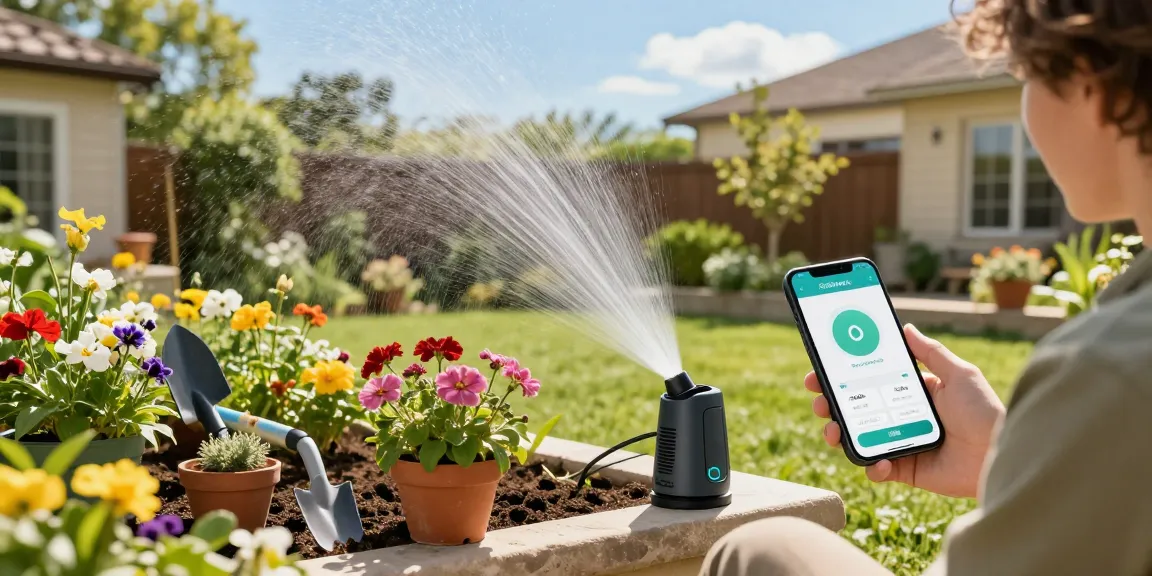
If your yard is small with patchy dry spots, short mobile sprinklers timed for longer runs once or twice weekly often work. For larger, irrigated lawns with multiple zones, a WiFi-enabled sprinkler timer from RainPoint can schedule deep cycles and adjust for weather automatically. Vegetable beds and flower borders do better with targeted, low-volume systems like drip or soaker lines that focus water in the root zone rather than spraying the air.
Step-by-step: How to determine exactly how often to water
Start with four simple steps to set a reliable watering frequency that fits your lawn type, soil, and climate.
- Know your soil type — Sandy soils drain quickly and need shorter, more frequent cycles; clay soils hold moisture and need longer, less frequent cycles.
- Measure your sprinkler output — Use empty tuna cans or rain gauges: run a zone for 15 minutes and measure inches per can, then scale to reach your target weekly amount (1 inch = 1 inch of water per square foot).
- Check root depth — After watering, use a trowel to dig a small hole and see how far the moisture has penetrated. Aim for 4–6 inches for cool-season turf, 6–8 inches for warm-season.
- Set schedule based on evapotranspiration — In hot, dry weeks you’ll need more frequent deep waterings; in cool, rainy weeks, you’ll skip them. A smart timer that adjusts for local weather is helpful here.
Practical figure: If your spray head delivers 0.5 inch in 15 minutes, you’ll need two 15-minute sessions per week to reach 1 inch total. For a clay lawn that holds water, you might do one 30-minute run per week instead.
Watering schedules that actually work (by yard type)
Different yards need different schedules. Here are clear, tested setups and when to use them.
Small suburban lawn (under 1,000 sq ft)
Challenge: Limited budget, mixed sun and shade. Solution: DIY mobile sprinklers or stationary spray heads on a simple timer. Schedule: 2 sessions per week of 20–30 minutes each, depending on head output; increase to 3 sessions during heatwaves. Example: Jenna switched from daily 10-minute runs to two 25-minute deep runs each week and saw greener, tougher turf within three weeks.
Large lawn with multiple zones
Challenge: Zone-specific sun exposure and soil differences. Solution: Install in-ground zones and control them with a smart WiFi sprinkler timer. Smart controllers can reduce water use by up to 20–30% versus fixed timers by adjusting for rainfall and local conditions (EPA and WaterSense note that smart controllers save water—some report savings up to 15,000 gallons per year in whole-home systems). Use longer cycles less often—e.g., 3 zones each watered once or twice weekly on staggered days to prevent runoff.
Zone TypeTypical Run TimeFrequencySun lawn (pop-up rotors)30–45 min1–2× weeklyShaded lawn (sprays)20–30 min1–2× weeklySandy soil15–25 min2–3× weekly
Vegetable garden and flower beds
Challenge: Need precise, root-focused moisture without wetting foliage. Solution: Drip irrigation and soaker hoses that deliver water slowly. A complete drip kit will let you run 20–30 minutes 2–3 times per week depending on emitters and soil; raised beds often need more frequent runs than in-ground beds. For detailed cycle and soak planning—especially to prevent runoff on slopes—click here to learn how often to water your lawn for best results and apply similar principles to garden beds.
Advanced tips: timers, cycle-soak, and signs to adjust
Problems often come from runoff, uneven coverage, or weather shifts. These fixes make your schedule resilient.
Use cycle-and-soak to avoid runoff
On compacted or sloped areas, split a single watering into multiple short cycles with soak intervals—e.g., three 10-minute cycles spaced 30 minutes apart—so water has time to infiltrate. This technique reduces waste and ensures deep penetration. Many smart controllers support multiple start times per zone so you can automate this without manual resets.
Watch for telltale signs and tweak
- Footprints that don’t bounce back: increase frequency or duration.
- Yellowing or wilting in the heat of the day: check soil moisture; wilted grass that recovers in the evening likely needs deeper watering less often.
- Pooling or runoff during watering: shorten cycles and add soak periods.
A WiFi timer such as the RainPoint model lets you change run times from your phone when a heatwave hits or a storm passes, so you don’t have to drive home to adjust settings. For users who want automatic adjustments based on weather, that remote control and the ability to set cycle-and-soak routines combine to save water and protect the lawn.
For reliable figures and additional guidance, many university extension sites publish turf-specific watering charts and the EPA’s WaterSense program offers tips on smart irrigation controls and average household savings.