A cleaning robot earns its place by removing dirt without creating new work. The global race matters only when machines can prove that result across floors, rooms, messes, and charging cycles.
This article focuses on the tests that should decide progress, since no evidence pack supports claims about a specific company or model.
- Measure dirt removal, not movement alone
- Count charging, rescue, and setup time
- Check what the robot leaves behind
Start with the cleaning job
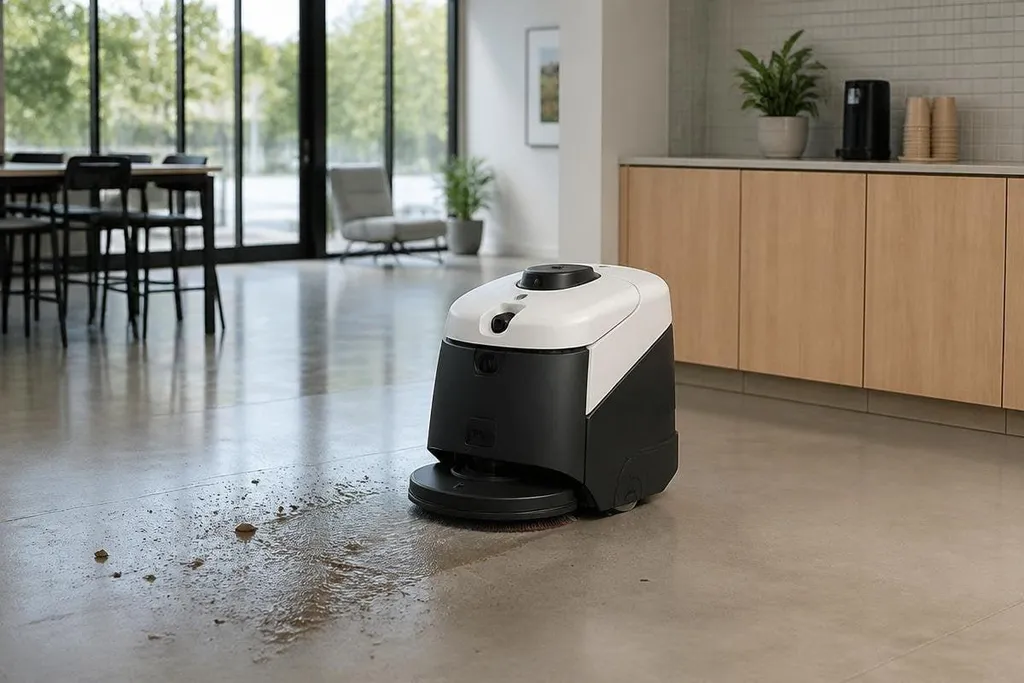
A robot vacuum, mop, window cleaner, or bathroom machine faces a different task. A vacuum must collect dust and larger debris. A mop must spread enough water to clean, then leave the floor safe to walk on.
That difference changes the hardware. A robot that maps a room well may still miss corners. A machine with a strong brush may scatter rice or hair. A mop that carries a large water tank may need more weight, which can raise power use and make movement harder.
The test should match the job. Use the same floor area, dirt load, moisture level, and room layout for every run. Record the result in grams of dirt removed, square meters cleaned, or visible marks left behind.
Autonomy has a cost
Cleaning robots need more than motors and brushes. They need sensors to locate walls, stairs, furniture, and people. They also need software that turns those readings into a route.
A route can look good on a map and still waste time. The robot may return to its dock too often, circle a table leg, or stop when a cable blocks its path. Those events matter because a person must fix them.
Count human help as part of the test. A 60-minute cleaning run that needs three rescues may be less useful than a slower run that finishes without one. Record each stop, the reason for it, and the minutes needed to restart the machine.
Battery size alone tells you little. The useful number is completed floor area per charge, followed by the time needed to refill or swap the battery.
For a home, a long charging pause may be tolerable. For a hotel or office, it can leave part of the building untouched.
The hard parts are near the edges
Most cleaning robots work in open areas. Their limits appear near stairs, corners, chair legs, cables, rugs, door tracks, and wet patches.
Those spaces deserve their own test. Place the same obstacles in the same positions, then check how often the robot reaches the edge and how much dirt remains there. A machine that cleans the center of a room but leaves a strip along every wall still needs manual work.
Safety needs a clear check too. The robot should stop when lifted, slow near a drop, and avoid pulling loose cables into its brushes. The exact result depends on the design, so the maker should publish the test setup rather than rely on a short video.
A cleaning robot that passes a stop test still needs measured floor coverage and battery life. Robot24 gives you a place to check those figures beside the named machine, test site, and date. That makes the next comparison about working results, not launch footage.
What the race should measure
The phrase “better cleaning robot” needs a fixed scorecard. Without one, each maker can choose the test that gives its machine the best result.
A useful report would show floor area completed before charging, dirt removed from open floor and edges, human rescues during each run, water or dust used per square meter, time spent cleaning, charging, and emptying, plus results on cables, rugs, steps, and narrow gaps.
Those measures give buyers a way to compare machines across brands. They also give engineers a clear target: fewer stops, cleaner edges, and less work after the robot finishes.
A buying check
Use these questions before paying for a cleaning robot:
- What exact cleaning task does it perform?
- Does the maker publish a repeatable test?
- How much floor does one charge cover?
- Who empties the bin or fills the tank?
- What happens when the robot meets a cable or step?
- Can you buy brushes, filters, batteries, and other worn parts?
I'd skip any machine whose maker shows polished movement but gives no result for dirt removal or human rescue time.
The next useful step is plain: makers should publish the same test data for every model. Until that happens, the better cleaning robot is the one with measured results, fewer interruptions, and a clear answer for the work it still leaves to you.